There comes a moment when we begin to listen to the body again. Beneath the noise of habit and the urgency of daily life lies a deeper intelligence, asking only that we return to it with care.
The Health Protocol is a space for evidence-grounded stewardship of the body. Here we explore how plant-based nutrition, mindful movement, restorative rest, and inner clarity converge into a single practice of alignment with the body's original design.
Each message is an invitation to remember that what is common is not always natural, and that vitality is built in the quiet daily work of returning home to the body.

We have made stress the villain of modern life. We talk about escaping it, lowering it, getting rid of it, as though the goal were a life with none at all. But stress is not the enemy. It is the body meeting a real demand, the surge of energy and focus that lets us rise to what a moment asks. The body was built for this. What it was not built for is an alarm that never switches off.
Last week we turned to movement, the body’s need for motion woven through the day. This week we turn to the nervous system, the part of us that decides, moment by moment, whether we are safe or under threat. Movement and stress are closer than they seem. Both are the body answering a demand, and both depend on the return to rest that is meant to follow.
What stress is for
Stress is the body’s way of meeting a demand. Faced with something urgent, the body releases cortisol and adrenaline, the heart quickens, attention narrows, and fuel pours into the blood. This is not damage. It is design. For a short, real challenge followed by recovery, this response is one of the most useful things the body does. It is what lets us act when action is needed. The trouble begins not with the surge itself, but with what happens when the demand never ends and the surge is never allowed to pass.
The alarm that never switches off
Modern stress is rarely a lion in the grass. It is a thousand small, unfinished alarms: the message that waits, the bill that looms, the worry that never quite resolves. The body cannot tell the difference between a real threat and a remembered one, so it keeps the response switched on. Cortisol stays high. The systems that should be doing quiet, essential work, digestion, repair, immune defense, stay turned down. Held this way for months and years, the very response that was meant to protect us begins, slowly and quietly, to wear us down.
Stress was never the enemy. It is the alarm that forgets to switch off, the surge that is never allowed to pass, that slowly wears the body down.
SAVI
What the research found
Some of the most striking evidence comes from the study of aging itself. In a 2004 study published in the Proceedings of the National Academy of Sciences, researchers compared mothers under heavy, long-term caregiving stress with mothers under less, and measured their telomeres, the protective caps on the ends of our chromosomes that shorten as cells age. The women under the highest, longest stress had telomeres that looked, on average, about a decade older than their years. Chronic stress, in other words, does not stay in the mind. It reaches into the cell and moves the hands of the body’s clock.
The invitation this week
This week, practice the return. You cannot remove every demand, and you would not want to. What you can do is help the body finish what it starts, to come down after it rises. The simplest doorway is the breath. When you notice the alarm, breathe out slowly, letting the exhale run a little longer than the inhale, just a few breaths at a time. The long exhale is the body’s own signal that the danger has passed. You are not trying to live without stress. You are teaching the body, gently and often, how to come home from it.
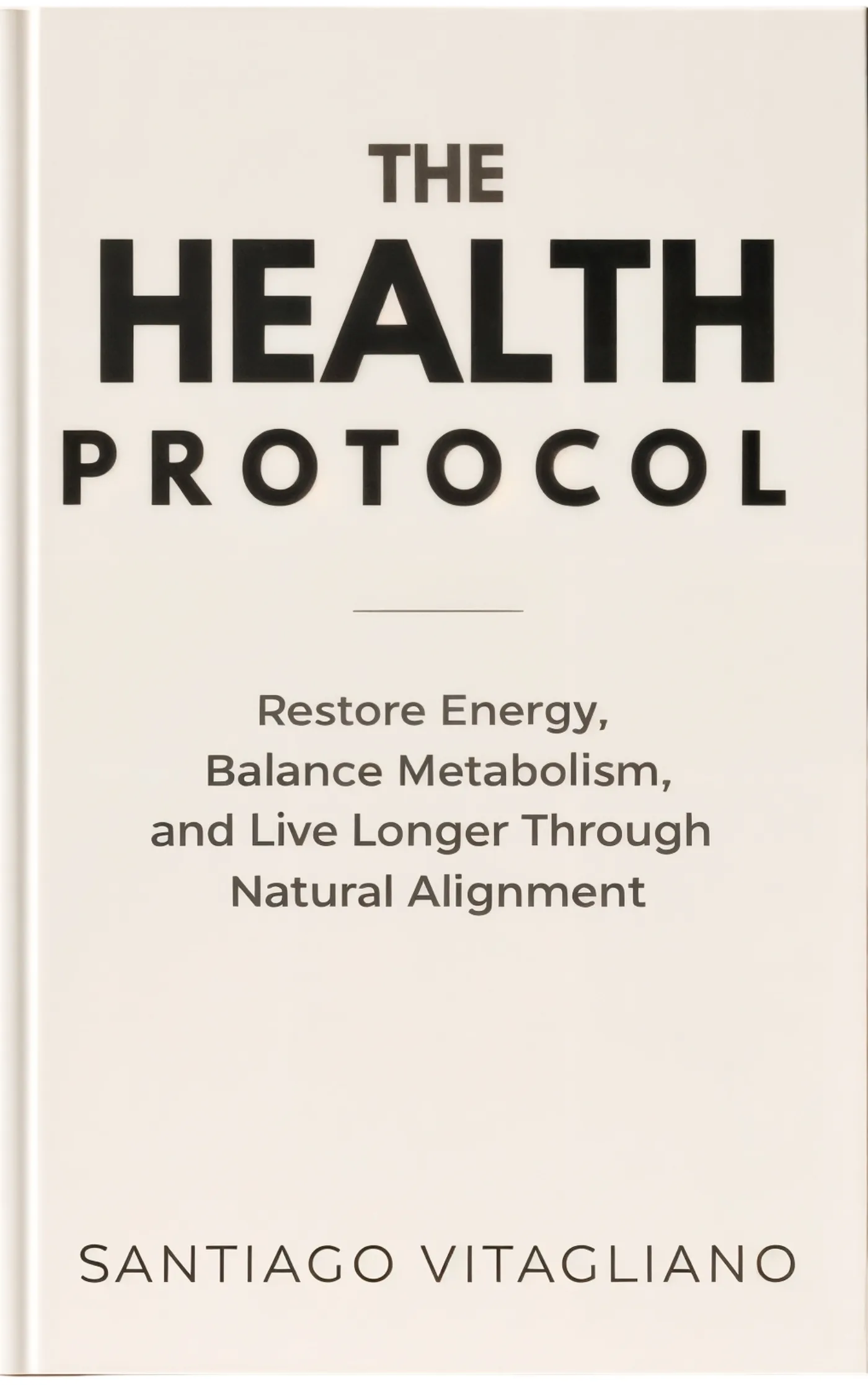
If this week's reflection lands, the full framework is gathered in three places. The book carries the argument. The Spanish edition carries the same argument for readers who think and pray in Spanish. The seminar carries the system, six narrated modules with worksheets and the daily practice stack.
May this week's guidance meet you exactly where you are and become one small, sustainable step in caring for your body. Eat well, move often, and rest deeply.
In care, clarity, and good health,