There comes a moment when we begin to listen to the body again. Beneath the noise of habit and the urgency of daily life lies a deeper intelligence, asking only that we return to it with care.
The Health Protocol is a space for evidence-grounded stewardship of the body. Here we explore how plant-based nutrition, mindful movement, restorative rest, and inner clarity converge into a single practice of alignment with the body's original design.
Each message is an invitation to remember that what is common is not always natural, and that vitality is built in the quiet daily work of returning home to the body.

We treat eating as the event and the hours between meals as empty time, a waiting room before the next plate. The body does not see it that way. Some of its most important repair work begins only when the food stops coming, in the quiet stretches we rarely think about and almost never protect.
Last week we looked at the inflammation loop, the low fire that shapes how we age. This week we turn to one of the simplest ways to let that fire settle and give the body room to reset: the gap between meals, and the work it quietly makes possible.
The two states the body moves between
Every few hours, your body shifts between two modes. After a meal it is in the fed state: insulin rises, blood sugar is put to use, and whatever is not needed right now is stored as fat for later. Then, as the hours pass and no more food arrives, insulin falls and the body crosses into the fasted state, where it stops storing and begins drawing on what it saved. This rhythm is normal and ancient. The trouble in modern life is that we rarely leave the fed state. With breakfast, snacks, sweetened coffee, and late dinners, insulin stays elevated from morning until night, and the body almost never gets the signal that it is safe to switch over and burn. We are not built to be always topping up. We are built to swing between filling and using.
What the empty hours unlock
When the gap is long enough, something more than fat-burning begins. The cells start a housekeeping process called autophagy, literally self-eating, in which they break down and recycle their own damaged parts, clearing debris that accumulates with age. The biologist Yoshinori Ohsumi won the 2016 Nobel Prize in Medicine for mapping how this cellular cleanup works. Around the same window, the body shifts its fuel from glucose toward ketones drawn from fat, a change the neuroscientist Mark Mattson and colleagues described in a 2019 New England Journal of Medicine review as the metabolic switch, typically engaging somewhere after twelve hours without food. None of this requires extreme fasting. It asks only that the kitchen stay closed long enough for the body to turn from digesting to repairing.
The body was never meant to be always digesting. Some of its deepest repair happens only in the spaces we forget to give it.
SAVI
How to give the body its gap
You do not need a dramatic fast to receive most of this. The simplest and most sustainable move is to widen the overnight window: finish dinner a little earlier, delay breakfast a little, and let twelve to fourteen unbroken hours pass between the last bite at night and the first in the morning. Consistency matters more than length; a steady twelve hours most nights does more than an occasional heroic day. This is not for everyone, and honesty about limits matters: anyone who is pregnant, managing diabetes or blood-sugar medication, recovering from disordered eating, or otherwise medically fragile should speak with a clinician first, and no one should turn a gentle gap into punishment. For most people, though, the overnight gap is the easiest repair the body offers, and it costs nothing but a little intention about when the day's eating begins and ends.
The invitation this week
For seven days, give the body one clean gap. Choose a time to finish dinner and do not eat again until morning, aiming for a steady twelve hours. No counting calories, no white-knuckling. You are not depriving the body. You are handing it the one thing it cannot do while it is busy with food: turn inward, take stock, and repair.
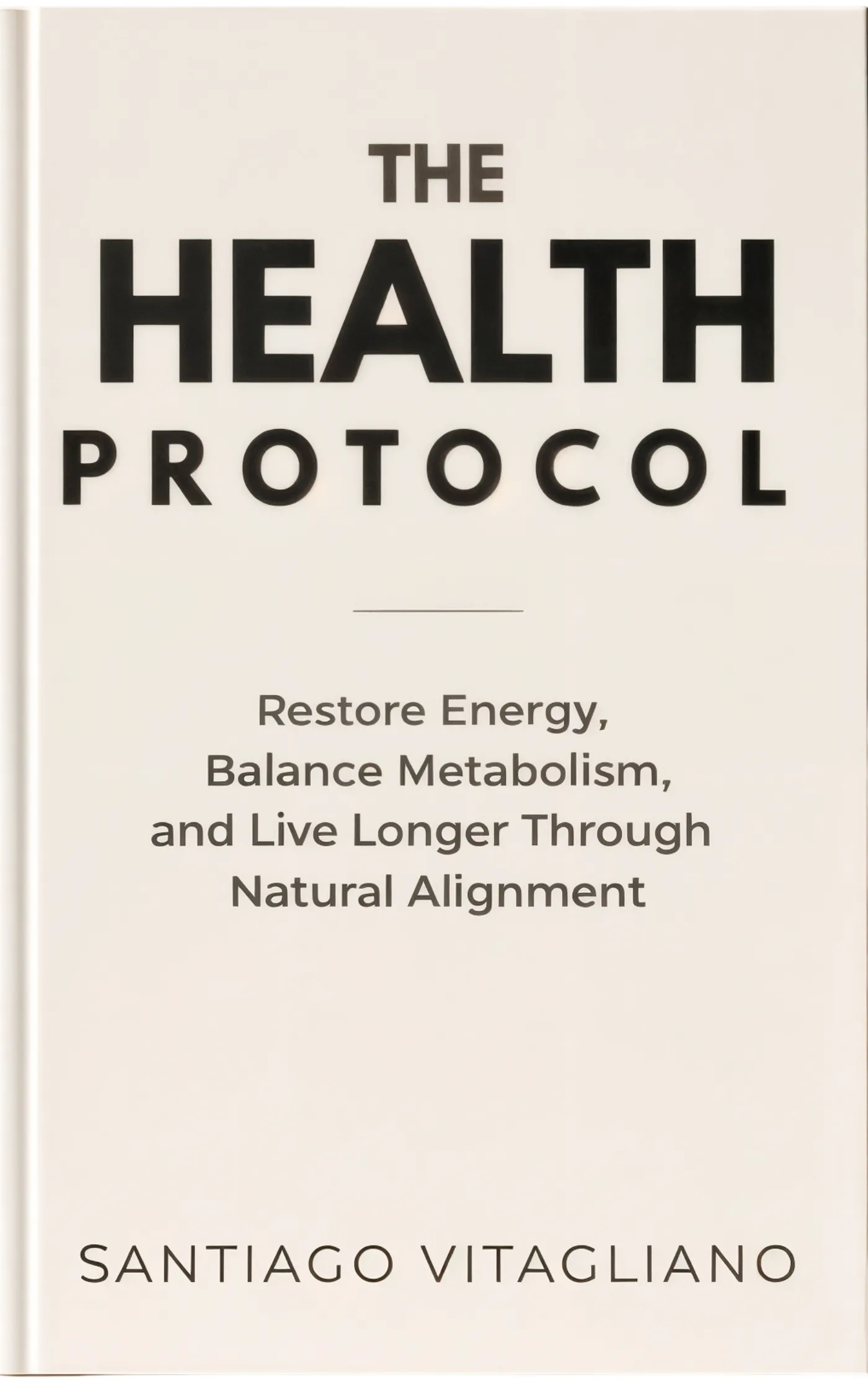
If this week's reflection lands, the full framework is gathered in three places. The book carries the argument. The Spanish edition carries the same argument for readers who think and pray in Spanish. The seminar carries the system, six narrated modules with worksheets and the daily practice stack.
May this week's guidance meet you exactly where you are and become one small, sustainable step in caring for your body. Eat well, move often, and rest deeply.
In care, clarity, and good health,